
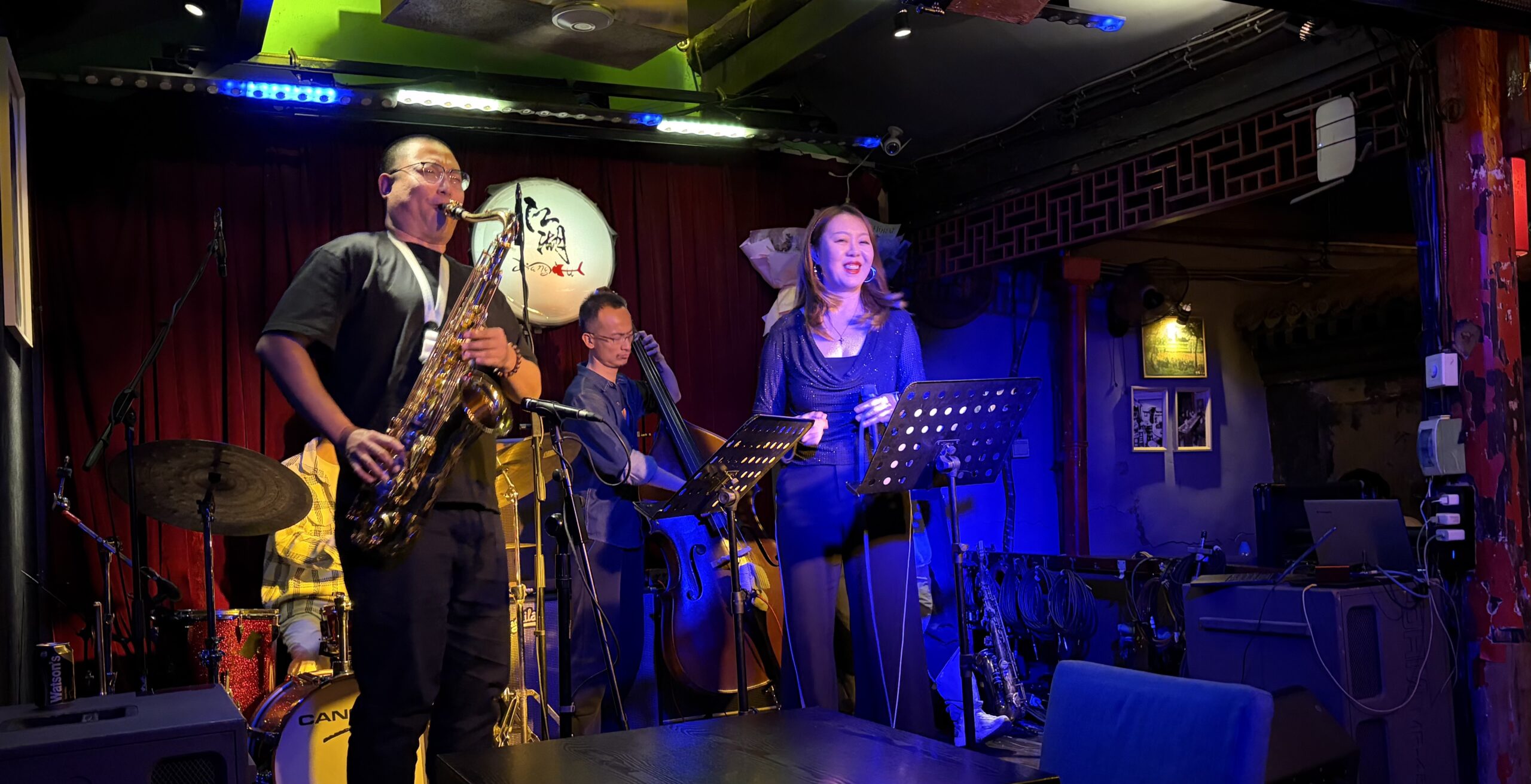
Hutongs are an iconic feature of old Beijing. These grey-brick courtyard homes have long lost their residential appeal from lack of modern amenities like private bathrooms; instead, the narrow cobblestone alleys are packed with bars, cafés, and live music venues. The Jianghu Bar offers blues, funk, jazz, and other styles on rotating nights of the week in a casual classroom-sized environment with red pillars and Ming-style crossbeams.
Blue Voyage’s set at Jianghu Bar featured music performed by legendary vocalist Billie Holiday and/or tenor saxophonist Lester Young to match the instruments of the group’s leaders, singer Lei Na and tenor saxophonist Lü Feng. Neither singer nor saxophonist sounded like the 1930s jazz legends, but just like the repurposed hutong in which they performed, the music was reimagined to fit their eclectic blend of soulful jazz and R&B.
Lester Young’s tone carried a soft graininess: you could hear his breath rushing through the horn and dissolving into an airy vibrato as his tongue flickered against the reed. Lü Feng instead wrapped each note in sweet velvet, calling later soulful players like Stanley Turrentine to mind. His favorite strategy was to quiet down the rest of the band so he could build a solo over a running bassline, a drumroll eventually cueing in the guitar and bass to an uptempo swing beat before he climaxed with gospel-inflected squeals.
Lei Na avoided imitating Billie Holiday’s raspy, intimate whisper. Instead, she sang in a warm alto with immaculate English pronunciation and gently scatted like Ella Fitzgerald between verses.
Standards performed by Holiday and Young together in the 1930s—“Body and Soul,” “What a Little Moonlight Can Do,” “After You’ve Gone”—came in styles anywhere from slow jazz ballads to up-tempo bossa nova (featuring flute rather than sax) to rolling shuffles. Lei Na also crooned over “Goodbye Pork Pie Hat,” a brooding eulogy for Lester Young composed by Charles Mingus with lyrics later added by Joni Mitchell.
Each time the band threatened to stop, patrons pounded their beer mugs and called for more. One vocal audience member, a singer himself, was cajoled to jump on stage with them, but waved his hands to decline through a mouthful of peanuts.
Not every member of the audience was up to speed on the music, though. “Is that a sax?” I heard a man at the table behind us ask his friend, marking a pause in their inebriated conversation.
Blue Voyage concluded their set with a song long past the era of Holiday and Young: Stevie Wonder’s “Isn’t She Lovely.” Lü Feng and a young alto saxophonist (who played a solo set during the intermission) traded joyful toots as the crowd cheered them on. Ultimately, both the music and the venue drew on the past without being bound by it, offering a backdrop not for nostalgia but for present-tense fun.

胡同爵士:Billie Holiday与Lester Young的音乐
胡同是老北京的一个标志性特色。这些灰砖四合院早就没了居住的吸引力,因为缺少现代设施,比如私人卫生间;取而代之的是,狭窄的石头小巷里挤满了酒吧、咖啡馆和Live House。江湖酒吧每周轮流上演蓝调、放克、爵士等风格,场地不大,像个教室,但有红柱子和明式梁架。
Blue Voyage 在江湖酒吧的演出,选的都是传奇歌手Billie Holiday和/或次中音萨克斯手Lester Young唱过的曲子,正好对应乐队主唱雷娜和次中音萨克斯手吕风的乐器。主唱和萨克斯手都没刻意模仿三四十年代的爵士传奇,但就像他们演出的那个被重新利用的胡同一样,音乐也被重新想象,融进了他们自己那种混合了灵魂爵士和R&B的风格。
Lester Young的音色有一种粗糙的柔和感:你能听到他的气息冲过萨克斯管,散成一种轻飘飘的颤音,舌头在簧片上轻轻弹动。吕风则不一样,他把每个音符都裹上一层甜美的丝绒,让人想起后来的Stanley Turrentine那样的灵魂乐手。他最喜欢的招数是让乐队其他成员安静下来,这样他就能在一条跑动的贝斯线上慢慢搭建独奏,然后用一段滚奏把吉他和贝斯带进一个快节奏的摇摆节拍,最后他自己再用带着福音味道的高音嘶吼收尾。
雷娜没有去模仿Billie Holiday那种沙哑、私密的低吟。她用的是温暖的女中音,英文发音非常清楚,在段落之间还会像Ella Fitzgerald那样轻轻地唱出“哔巴嘟吧”的拟声。
那些Holiday和Young在三四十年代一起演过的标准曲——《Body and Soul》《What a Little Moonlight Can Do》《After You’ve Gone》——被演绎成各种风格,有慢的爵士民谣,有快节奏的巴萨诺瓦(用长笛代替了萨克斯),也有摇摆的 shuffle 节奏。雷娜还唱了一首《Goodbye Pork Pie Hat》,那是Charles Mingus为Lester Young写的一首沉重的挽歌,后来由Joni Mitchell填上了词。
每次乐队快要停下来的时候,客人们就敲着啤酒杯喊再来一首。有个观众自己也是歌手,被人撺掇着上台一起玩,但他一边嚼着花生一边摆手拒绝了。
Blue Voyage 用一首远远晚于Holiday和Young时代的歌结束了演出——Stevie Wonder的《Isn’t She Lovely》。吕风和一位年轻的 Alto 萨克斯手(中场休息时他独自演了一套曲子)来回吹着欢快的小调,台下的人也跟着起劲儿鼓掌。最终,音乐也好,场地也好,它们都从过去借了东西,但没有被过去绑住,更像是给当下的快乐搭了一个背景。
2 responses to “Hutong Jazz: The Music of Billie Holiday & Lester Young”
Thanks for the music history lesson. I knew nothing about Billie Holiday.
Then I’d say you only know slightly more than before, but the important part is her legacy is alive and well in Beijing!