
Seamus Blake对音乐的思想
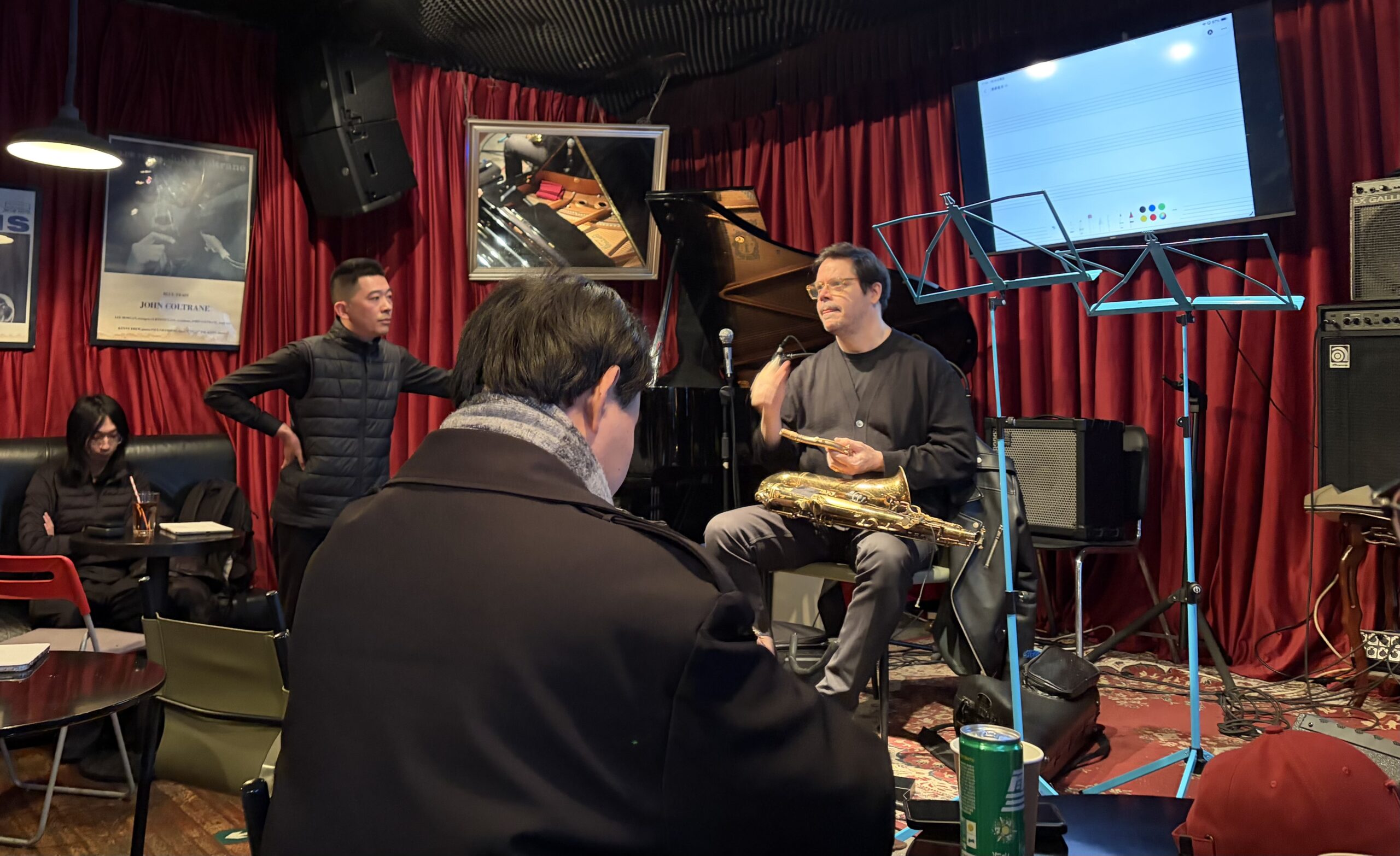
On a late afternoon in Beijing’s trendy Houhai neighborhood, families pushed ice sleds across a frozen pond. Inside the East Shore Live Jazz Cafe across from the pond, Canadian tenor saxophonist Seamus Blake was holding court. Blake is focusing on the music of jazz great Eddie Harris for this tour. The title of his new record, EH!, nods both to his hero’s initials and his own Canadian heritage.
一天下午,北京后海这片时髦地儿,好多家长都带着孩子在结冰的湖面上滑冰车。就在湖对面的东岸爵士俱乐部里,加拿大 tenor 萨克斯手Seamus Blake正在里头演出。这次巡演,Blake打算主攻爵士大师Eddie Harris的作品。他刚出的那张新专辑叫《EH!》,这名字既致敬了他偶像的名字缩写,也捎带提了他自己的加拿大出身。
A group of 20 local jazz fans, nearly all saxophonists based on a show of hands, crowded around the stage where the band would perform later that evening. Blake shared thoughts and anecdotes with pauses for translation, occasionally picked up his horn to demonstrate an idea, and fielded questions for over an hour.
那天晚上,二十几个本地的爵士乐迷围绕着舞台,乐队之后就在那儿演。基本上全都是吹萨克斯的。Blake在那分享了不少自己的想法和趣事,说一段还得停下来等等翻译,时不时还拿起他的萨克斯给大伙儿示范一下。就这么着,光回答问题就整了一个多小时。
Here is a sampling of the insights I gleaned from the session.
下面是我从他那天聊的内容里记下来的一些想法。
On Learning Music – 关于学音乐
I think the most important thing is to learn, and in the beginning you imitate, just like a baby learns to speak from imitating its parents. That’s how I learned to play, by imitating solos I liked.
我觉得最重要的就是学,而且一开始肯定得模仿,就跟小孩学说话都是先从模仿爸妈开始一样。我以前就是这么学的,听到好听的独奏就跟着吹,模仿他们。
The first solo I learned was “Oleo.” The chord progression was based on Gershwin’s “I Got Rhythm.” It helped me to learn a few solos and analyze why they played each note. I was learning languages from those solos.
我学的第一段独奏叫《Oleo》。它的和弦是照着Gershwin那首《I Got Rhythm》来的。那会儿我就学着吹几段独奏,然后琢磨他们为啥要在这个地方吹这个音。其实就等于是在从那些独奏里头学人家怎么说话。
Writing out the rhythms of solos was the hardest thing for me at first. It was a mystery because the jazz notes didn’t follow exact patterns of 8th notes; they swing. Once I understood how to write simple 8th note lines even if they’re not played as 8th notes, then I could transcribe the solos much better.
一开始最难的就是把那些独奏的节奏给记下来。因为爵士乐里那些音符它不是规规矩矩的八分音符,它是带摇摆的,我当时就觉得挺难理解的。后来我想通了,就算吹出来的不是八分音符的感觉,我也先用八分音符的记法把旋律写下来,从那以后,记谱就顺溜多了。
It’s one thing to just learn the notes. But if you don’t understand why or what the notes are, it’s like watching a movie and not understanding the story or the message. You have to try to understand how they’re thinking, like reverse engineering. If you have a Swiss watch and want to understand how it’s built, you take it apart and try to understand how each piece affects the other pieces.
光把音符学下来是一回事,但你得明白人家为啥要这么吹,不然就像看个电影,光看了个画面,根本没看懂它讲了啥。你得试着去琢磨人家当时是怎么想的,就像把东西拆开了反过来研究一样。比方说你拿到一块瑞士表,你想知道它是怎么造出来的,那你肯定得把它拆开,看看每个零件是咋配合的。
On Sound – 关于声音
You have to hear the sound you want in your head first. You can’t find something unless you know that you’re looking for it. [Points to a poster of John Coltrane’s Blue Trane on the wall] That record right there was very important for me. His sound on that record to me was what a saxophone should sound like.
你得先在脑子里听到你想要的那个声音。你要找一哥东西,你总得知道自己在找什么吧。(指着墙上John Coltrane《Blue Trane》的海报)这张唱片对我来说特别重要。我觉得他在这张唱片里的那个音色,就是萨克斯应该有的那种声音。
You can tell a person’s sound because there’s something unique about it. You can hear two notes and know it’s Miles Davis. And being unique is not something you can force.
一个人的音色,你就是能听得出来,因为它有自己特别的地方。有时候才吹了两个音,你一听就知道那是Miles Davis。而且这种独特性,是没法硬装出来的。
The beautiful thing about jazz for me is that everyone doesn’t have to sound the same. Everyone can play their own way. Your sound is your style, the things that influenced you, that inspired you, the things you’ve explored and creatively made all become part of you.
我觉得爵士乐最美的地方就在于,它不要求所有人都吹成一个样。每个人都可以按自己的方式来。你的音色其实就是你的风格,那些影响过你的、启发过你的东西,还有你自己摸索出来的东西,最后都变成了你的一部分。
The reed decides everything about the [sax] sound. Coltrane played slightly harder reeds, which influenced the sound towards the upper register.
哨片这个东西,基本上决定了萨克斯的声音是什么样的。Coltrane用的哨片就偏硬一点,所以他吹出来的音色,高音区的感觉就比较强。
On Influences – 关于影响
I started out being inspired by Sonny Rollins, and Coltrane and Cannonball Adderley. But then I started to listen to other styles of music. My influence goes from Bach to Nirvana to Aphex Twin to The Beatles to Bartok to Count Basie to Brad Mehldau. I’d say I just like all good music.
我刚开始那会儿,主要是受Sonny Rollins、Coltrane还有Cannonball Adderley的影响。但后来我也开始听别的类型的音乐。影响我的东西挺杂的,从巴赫到Nirvana,到Aphex Twin,到Beatles,到巴托克,到Count Basie,再到Brad Mehladu,我都听。总之一句话,只要是好的音乐,我都喜欢。
It’s better to be open and curious and love and mix many kinds of things and experiment.
还是保持开放一点,带点好奇心,去喜欢各种各样不同的东西,然后把它们混在一起试试看,这样会比较好。
On Rhythm – 关于节奏
In jazz, rhythm is the most important thing. It’s African music mixed with European harmony. Schools often emphasize harmony, but what I learned from Sonny Rollins was how important rhythm is.
在爵士乐里,节奏是最重要的。它本来就是把非洲音乐和欧洲的和声掺在一起的东西。学校老爱强调和声,但我是从Sonny Rollins那儿明白的,节奏有多关键。
It’s interesting to listen to singers like Ella Fitzgerald when they scat a really fast melody. What I learned from singers is that you don’t have to be metronomically on the grid. Their phrasing is free. It’s a combination of sometimes singing inside the rhythm and sometimes floating on top of the rhythm. Singers never sing in only 8th notes. And as a horn player, you want to play like you’re singing.
听Ella Fitzgerald她们唱那种很快的拟声即兴,特别有意思。我从歌手身上学到的一点就是,你不一定要卡着节拍器那么准地吹。她们处理乐句是自由的,有时候踩着拍子唱,有时候又好像飘在拍子上面。歌手从来不只会唱那种规规矩矩的八分音符。所以作为管乐手,你得试着像唱歌那样去吹。

On Practice – 关于练习
It’s good to practice slow. The slower you practice a song, the more time you have to think about everything you’re doing. Are you relaxed or are you tight? Do you feel the horn vibrating in your body?
慢下来练挺好的。你练得越慢,就越有时间去想自己做的每一个动作。比如你现在吹的时候,人到底是放松的还是绷着的?你能感觉到乐器在身体里震动吗?
Try practicing a fast song like it’s a ballad. Force yourself to really savor the melody.
你可以试着把一首快歌当慢歌唱来练。逼着自己去好好品味那个旋律。
A couple of things happen when you’re playing fast. One is that you start to panic, and you’re not relaxing. The other thing is that when the tempo gets fast, you have to feel bigger beats than just quarter notes. If you’re just thinking about each quarter note, you’ll get lost. So practice trying to feel the bigger beats, and that’ll help you feel more relaxed and change up your phasing.
一吹快曲子,人容易慌,一慌就松不下来。还有一点就是,速度一快,你得去感受更大的拍子,不能光盯着那个四分音符。你要是一直想着每一个四分音符,肯定会迷路。所以得练着去感受那种大的律动,这样你吹着就不那么紧,乐句的感觉也能不一样。
I recommend learning some piano to learn about harmony, and learning some drums to learn about rhythm. I heard that [tenor sax player] Kenny Garrett practices while tapping a hi-hat with his left foot.
我建议学点钢琴,对理解和声有帮助,再学点鼓,能帮你更好地理解节奏。我还听说,萨克斯手Kenny Garrett练习的时候,左脚会跟着打踩镲的拍子。
On Dynamics – 关于强弱
When you play soft, it brings people in. Classical music is a great source of inspiration for dynamics.
你吹得轻的时候,别人就会想凑近了听。古典音乐在处理强弱这块,特别值得学习。
On Improvising – 关于即兴
If you think about the fundamentals of music, it’s the theme and variation. It comes from classical music. I think one of the first jazz guys to do it a lot was Sonny Rollins. If you listen to his solos from the 50s, he takes an idea and keeps playing around with it and transposing it.
要是说到音乐里最基本的东西,其实就是主题加变奏,这最早是从古典音乐来的。我觉得爵士乐手里头,Sonny Rollins算是最早开始这么玩的人之一。你去听他50年代的那些独奏,他就是拿一个小点子,翻来覆去地玩,变着调吹。
Let’s say you’re watching a movie and there’s no main character, you don’t know what to follow and it’s just constantly new things all the time. Usually a movie focuses on a character. Music is easier for an audience to follow when there’s a theme that repeats. Like you can use the same shape but adjust it with harmony, or you can mess with the rhythm of it. [demonstrates on sax making the same notes longer-shorter, more staccato or flowing]
打个比方,你看电影的时候,要是里面没个主角,你不知道该盯着谁看,就光看一堆新东西不停地冒出来,那肯定得懵。电影一般都会围着一个人来讲。音乐也是,有一个主题在那儿反复出现,观众听着就比较容易跟得上。比如你可以把那个旋律的形状保留下来,只改改和声,或者在节奏上做点手脚,把它拉长点、缩短点,吹得跳一点或者连贯一点。(然后用萨克斯示范了一下)
Sometimes I think of improvising as moving between two notes. You want to go from point A to point B, but there’s so many different roads you can take. Or you could take a helicopter and go straight to the end point.
有时候我觉得,即兴就像是在两个音之间走。你想从A点到B点,但中间有很多不同的路可以选。当然,你也可以直接坐个直升机下子就到终点。
On Rules – 关于规则
The impressionists, like Debussy and Ravel, they were rebels. They wanted to break the rules they learned at the academy where they studied. The bebop jazz musicians broke the rules by playing faster. Charlie Parker came in and started playing so fast people couldn’t dance to it. Thelonius Monk was so original you could recognize him at one note.
像Debussy、Ravel这些印象派的音乐家,他们都算是那时候的造反者。他们就是不想照着学院里教的那套规矩来。Bebop那帮爵士乐手也是,他们把速度提得飞快,这不也是在破规矩嘛。Charlie Parker一出来,曲子吹得那么快,大伙儿都没法跟着跳舞了。还有Thelonius Monk,他的风格太独特了,就听一个音你都知道是他。
On Eddie Harris – 关于Eddie Harris
I’ve been listening to a lot of Eddie Harris and trying to embrace his spirit. I didn’t listen to him much when I was young.
我听很多Eddie Harris的音乐,想去感受他的那种精神。我年轻的时候反倒没怎么听过他的东西。
I think his use of electronics to change the sound of the saxophone was very interesting: his style, the angular melodies like “Freedom Jazz Dance,” using lines where the intervals are more important than the actual harmony. Also the range in his style. Eddie’s from Chicago so there’s a lot of blues in his music. There’s also a lot of funk. He love Brazilian music, bossa nova. He played piano, he sang, he scatted. He put a saxophone mouthpiece on a trumpet and did crazy things like that. He released an album of standup comedy, just the things he’d say before introducing tunes.
我觉得他特别有意思的一点是,会用电子设备去改变萨克斯的音色。他的风格,比如《Freedom Jazz Dance》里那种棱角分明的旋律,更注重音程关系而不是和声本身。而且他涉猎的风格也特别广。他是芝加哥人,所以音乐里有很多blues的东西,同时也有很多funk。他还特别喜欢巴西音乐和bossa nova。他不光吹管,还弹钢琴、唱歌、唱拟声即兴。他还干过把萨克斯的笛头装在小号上这种疯狂的事儿。他甚至出过一张脱口秀专辑,说的都是他上台介绍曲子前讲的那些段子。
I’m not usually into doing tributes, but it’s where we are historically. We’re at a point where jazz is becoming quite old, like classical music. But it’s harder to sell tickets to new things.
我一般不怎么做致敬谁的演出。但现在这个时代就是这样,爵士乐已经算是老古董了,跟古典音乐似的。可你要是搞点新的东西,票又不好卖。
On Motivation – 关于动机
The goal is to explore yourself, let music be an expression of what you love and what interests you. Your sound becomes a natural extension of all the things you practice, all the things in life that you do, and all the things that are important to you.
目标是去探索你自己,让音乐成为你喜欢什么、对什么感兴趣的一种表达。你的声音,它很自然就会变成你练过的东西、你生活中做过的事,还有那些你觉得重要的东西的延伸。
You have to be enjoying what you’re doing. If you feel like you’re struggling, the audience will sense that.
你自己得先享受你吹的东西。你要是觉得吹得费劲,底下的人是能感觉出来的。
On China – 关于中国
Chinese people do everything very quickly. Very organized, I appreciate that. Seeing big cities with so many people, but everything moves very efficiently, it’s inspiring.
我感觉中国人做事都特别快。而且很有条理,这点我挺欣赏的。你看这么大的城市,这么多人,但什么事都搞得井井有条的,看着挺受触动的。
Leave a Reply